Score voting
What is score voting and why is it good?
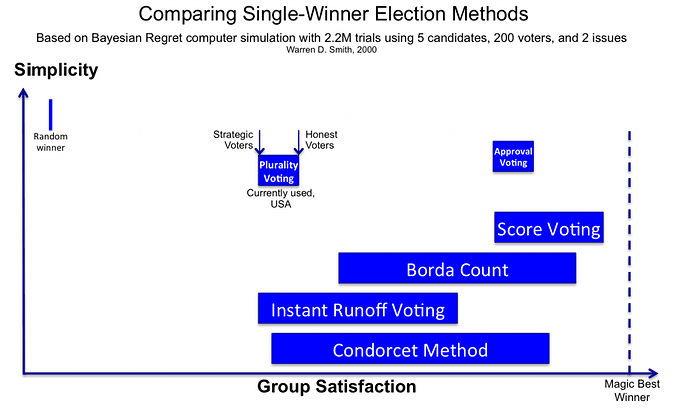
There are many different voting systems. The most common system is that you get one vote, and cast it for one of the options. This is called Plurality Voting, and in the diagram above you see that it's almost as bad as it gets. Why? So many problems, but in summary too much power is given to whomever formulates the options, and too little information is extracted from the voters. Read more here.
If you are part of a decision making group smaller than a country and have a genuine interest to make good decisions, choose a better voting method. With Score Voting, each voter gets to express their view of each option and with more nuance than just Yes or No. Score Voting with honest voters is hard to beat. With strategic (dishonest) voters, score voting will regress into approval voting, which isn't too bad either.
How does it work?
This implementation of score voting has a few quirks designed to change the dynamic of group decision making. The idea is to combine discussion and voting into an organic, creative process. It works best with smallish groups that can discuss and vote at the same time.
- Anyone can add options, even in the middle of the voting process. After all, why assume that the best options are always invented before voting starts?
- When everyone has voted for a certain option, the result for that option is made public, even if other options for the same questions are not done yet.
- Anyone can change their vote even after the result for that option is public.
- Anyone can add separate questions that become part of the same decision making process. After all, it is common to discover in the middle of a discussion that you're really talking about several separate but interdependent questions.
One powerful implication of this system is that it opens up for meta-decisions. You can add options such as "postpone decision" or "investigate X before deciding".
Ready to get started? Click the button on the top of the page!